2025 Third Party Monitoring

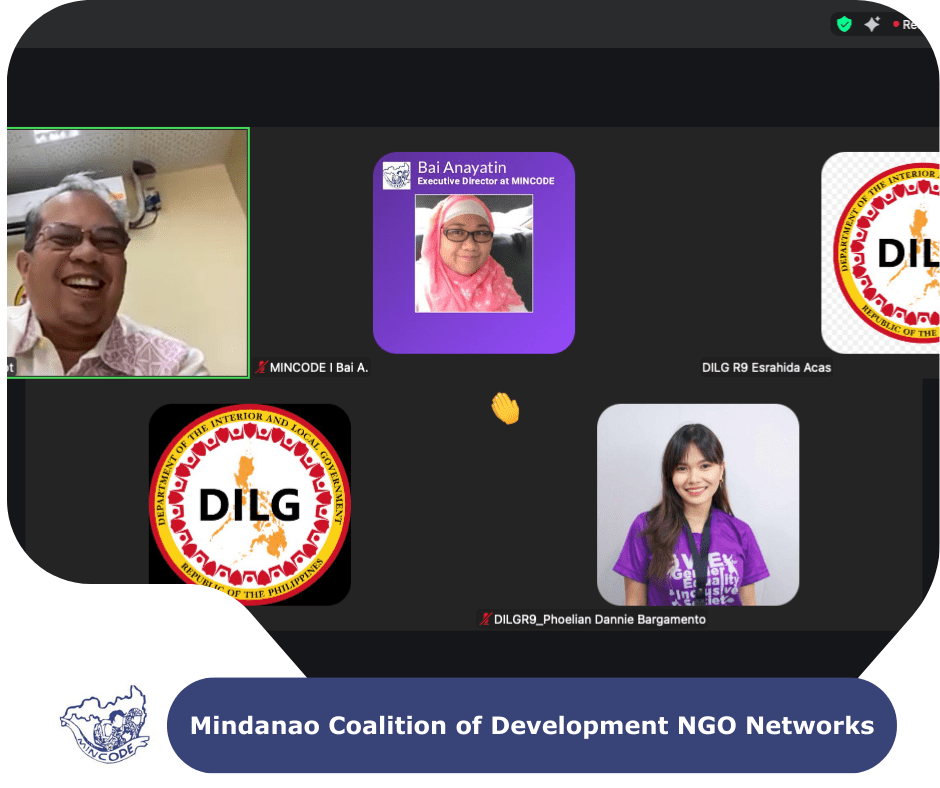
The Mindanao Coalition of Development NGO Networks (MINCODE) presented the results of its 2025 Third Party Monitoring (TPM). The presentation was made to the Department of Interior and Local Government (DILG) – Regional Office IX. This took place last Monday, December 1, 2025 through an online meeting.

The Philippine government allocated P1.51 trillion for infrastructure projects in 2024, equivalent to 5.7% of the country’s Gross Domestic Product. Considering the substantial allocation of public resources, it is imperative that implementation is transparent, accountable, and responsive to the needs of the citizens. The DILG commissioned local civil society organizations to conduct Third Party Monitoring (TPM). The TPM aims to provide an independent, non-partisan, and citizen-centered monitoring of locally-funded government infrastructure projects. This year, at least 50 LGSF-funded infrastructure projects for FY2022 to 2024 and completed as of December 31, 2024 were subjected to Third Party Monitoring.

In Region IX Zamboanga Peninsula, the DILG-Region IX and MINCODE covered 53 Projects funded by DILG through its Local Government Support Fund (LGSF) – 23 in Zamboanga del Sur, 14 in Zamboanga del Norte, 13 in Zamboanga Sibugay, and 3 in Zamboanga City. MINCODE conducted the TPM 2025 in partnership with its Member Network Regional Convenor in Zamboanga Peninsula, the Agri-Aqua Development Coalition Mindanao (AADC).

The TPM framework focused on three areas: (a) Governance and Oversight, (b) Process Implementation, and (c) Results and Citizens Feedback. The projects included farm-to-market roads, street lights, multi-purpose pavements, water systems, drainage canals, public market, school building, and ecotourism park.

Overall, the LGSF-funded projects subjected to Third Party Monitoring this year were successfully implemented and completed. These infrastructure projects undoubtedly contribute to addressing basic needs of communities in Zamboanga Peninsula. The farm-to-market roads made way for significant opportunities for farmers, fisherfolks, and students. The water systems and health centers refreshed mindsets and practices towards better health and sanitation outcomes. Street lights brightened up futures where villagers feel safe and productive. Indeed, when government projects are implemented, Filipino communities benefit.

As part of the presentation made to the DILG, MINCODE shared its findings, issues and challenges encountered, conclusions, and recommendations. A copy of the full report may be accessed here.

At the end of the presentation, DILG ARD Engr. Carmelo Enrique Libot expressed his appreciation to MINCODE for the insightful presentation of results of the Third Party Monitoring. He invited MINCODE to continue to share recommendations to improve LGU performance and promote citizen participation in governance. The DILG-IX Project Development and Management Unit headed by Engr. Esrahida Acas, together with its focal person for TPM, Engr. Dani Bargamento, also expressed their appreciation for the successful delivery of TPM services despite the limited timeline. In turn, MINCODE Executive Director Ms. Raizsa Mae M. Anayatin thanked DILG Region IX for trusting MINCODE. Furthermore, she appreciated them for enabling local civil society organizations to provide independent, non-partisan, and citizen-centered monitoring of government projects through TPM.

You’re Invited: Orientation of Psychosocial Support for Survivors of Earthquakes in Davao Region

On October 10, 2025, a rare and powerful “doublet earthquake” occurred in Davao Region. It consisted of two major tremors within the same day – magnitude 7.4 at around 9:43 in the morning and magnitude 6.8 at around 7:00 in the evening. Each quake triggered tsunami warnings and caused widespread disruption. 

With support from CARE Philippines, MINCODE was able to mobilize its members, particularly Kahugpungan sa Mindanao (KAMI) and Agri-Aqua Development Coalition Mindanao (AADC), to undertake rapid damage and needs assessments. As assessment activities are undertaken, immediate relief support were provided. 

Assessment results show that women and children in coastal and remote areas faced heightened vulnerability, especially due to displacement, disrupted services and potential exposure to protection risks. More particularly, psychosocial support is really needed and yet very few can provide this.

In view of this, MINCODE and its member Agri-Aqua Development Coalition Mindanao (AADC) jointly organized this Crash Course on Psychosocial Support. The session will be led by Professor Shella Marcela Padilla-Villanueva, PhD of the University of San Agustin, Iloilo City. Dr. Villanueva currently serves as the Academic Supervisor of the BS Psychology Program of the University of San Agustin. She pays a significant role in community-based mental health initiatives, particularly through her involvement with the KaTUWAng Program – a strategic partnership between the university and the Iloilo Provincial Government. Her work exemplifies a strong commitment to service-learning and mental health advocacy, bridging academic training with real-world impact.

The online crash course on psychosocial support will be held on Wednesday, October 15, 2025, at 6:30 PM via Zoom.

Join Zoom Meeting
https://us06web.zoom.us/j/86046553755?pwd=FWcbqVLCNnYdeR8lp9bpg6E0MgfTLy.1

Meeting ID: 860 4655 3755
Passcode: dasigdavao

Invitation: 9th PSEA Learning Exchange Session

The United Nations Philippines and the PSEA Network Philippines are pleased to invite stakeholders to the 9th PSEA Learning Exchange Session. This session will focus on the Government and Non-Government Organizations’ Investigation Policies and Practices on Sexual Harassment, Exploitation, and Abuse (SHEA). It is scheduled for September 29, 2025, from 2:00pm to 5:00pm, via MS Teams.

Guest speakers will be from the Civil Service Commission and Plan International Pilipinas. The representative from the Civil Service Commission will present the latest 2025 Rules on Administrative Cases in the Civil Service. Moreover, the representative from Plan will talk about the actual conduct of investigations. They will also discuss challenges, scenarios, and practices in handling SHEA cases.

MINCODE Members and Partners who are interested to join this session may do so through this link:  

Join the meeting now

Meeting ID: 359 221 901 022 3

Passcode: 4FF6vb66

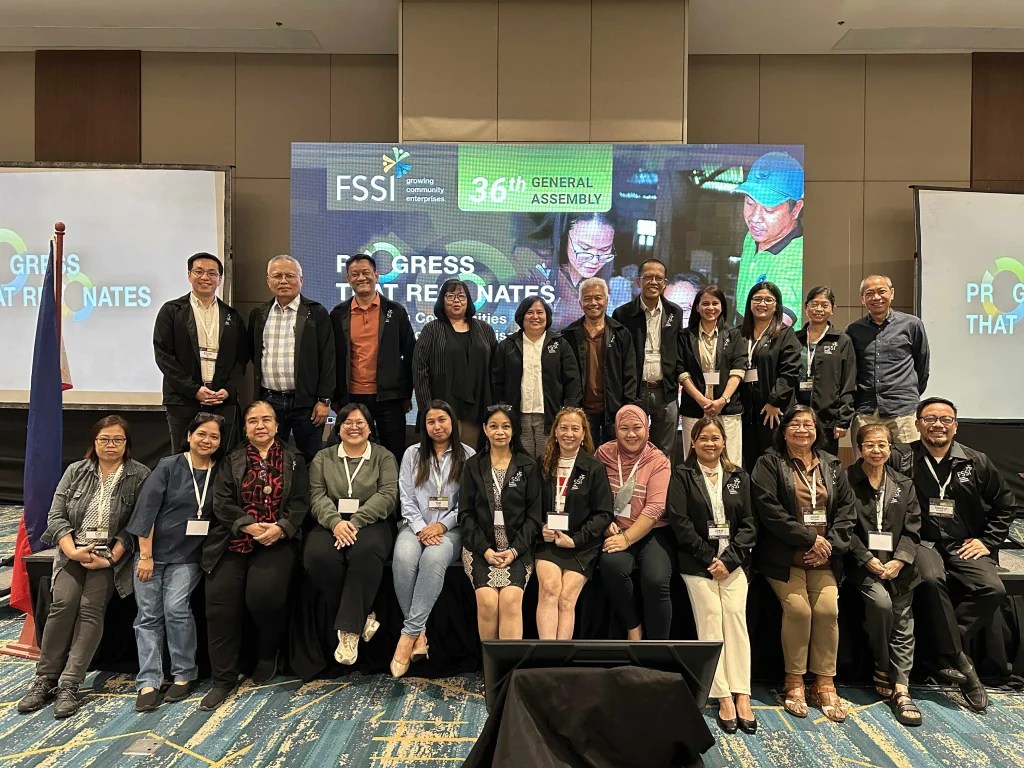
MINCODE Congratulates FSSI: 30 Years of Building Impact and Empowering Communities through Social Enterprises

The Foundation for Sustainable Society, Inc (FSSI) is a network of dynamic development organizations which promotes the triple bottom line (3BL) of sustainability: People, Planet, and Profit. FSSI aims to provide social investments to enterprises through the 3BL strategy and envisions empowered communities that uphold social justice, respecting integrity of creation, and realizing fullness of life.

FSSI was established in 1995 following a landmark debt-for-development swap between the Government of the Philippines and the Swiss Confederation. A counterpart fund was set up and entrusted to FSSI, which was tasked with supporting sustainable development initiatives for marginalized communities across the Philippines.

Through the years, FSSI supported over 300 social enterprises that not only deliver economic value but also contribute to social good and environmental stewardship. Indeed, FSSI is one of the leading social investment organizations in the Philippines.

On the occasion of FSSI’s 30th anniversary and as one of FSSI’s member organizations, MINCODE extends its heartfelt congratulations to FSSI on three decades of empowering communities and advancing sustainable development. MINCODE proudly recognizes FSSI’s pivotal role in fostering inclusive growth, social enterprises, and long-term positive impact. We honor FSSI’s contributions to sustainable livelihoods, especially in Mindanao communities, and we look forward to continued collaboration in advancing shared development goals for underserved and historically marginalized Filipinos.

For more information about FSSI, you may visit the website: FSSI.COM.PH.

From Documentation to Action: DILG IX Responds to MINCODE’s OGP Findings with LGU Capacity Building

September 12, 2025 –

In a virtual session held earlier today, MINCODE shared the results of its comprehensive documentation of Open Government Partnership (OGP) initiatives implemented by 16 LGUs in the Zamboanga Peninsula.

Copy of the OGP Documentation in Region IX is available here.

Considering the observations and results from the documentation, MINCODE provided the following recommendations:

On Transparency:

(1) Promote peer learning from high-performing LGUs to improve adoption of transparency practices. 

(2) Invest in digital infrastructure to enable livestreaming of budget planning sessions and online legislative tracking systems. 

(3) Provide technical support and equipment to LGUs facing connectivity and capacity challenges. 

(4) Encourage FOI institutionalization by advocating for the passage of a national law, supporting the development of local ordinances even in the absence of a national legislation, and facilitate capacity building activities.

(5) Encourage the use of charts and infographics in presenting and posting the LGU budget and fund utilization on the Full Disclosure Boards and Full Disclosure Policy Portal. Urge LGUs to make public documents, such as CDP, CLUP, and LGU profile and sectoral status, more accessible online. 

On Accountability:

(1) Support LGUs in adopting real-time online budget reporting through training, digital tools, and policy support. 

(2) Encourage formation of ethics committees and conflict of interest policies to strengthen internal checks and integrity mechanisms. 

(3) Develop clear performance metrics for LGU plans to ensure that local programs have measureable success indicators. 

(4) Develop performance assessments for elected officials to enhance public trust.  

(5) Revisit policy and practice on formulation and adoption of long-term development plans to ensure that it is aligned with the term of office of elected officials. 

On Participation:

(1) Expand digital literacy and access to promote remote participation in planning and budgeting. 

(2) Support creation of Local People’s Councils and citizen advisory boards to institutionalize inclusive decision-making. 

(3) Sustain capacity building programs for CSOs to ensure meaningful engagement in planning, budgeting, and procurement. Facilitate annual CSO forums and inter-LGU exchanges to share best practices and strengthen multi-sectoral collaboration. 

(4) Facilitate annual CSO forums and inter-LGU exchanges to share best practices and strengthen multi-sectoral collaboration. 

After hearing the findings and recommendations, DILG-IX officials committed to support LGUs in building their capacities. Regional and provincial learning exchanges will be organized to share learnings and best practices from high-performing LGUs. Peer-to-peer engagements will also be facilitated to foster culture of collaboration and learning.

Indeed, the OGP Documentation serves as a springboard and evidence-based programming for future LGU capacity building interventions in Zamboanga Peninsula. MINCODE shall fully support initiatives to turn this documentation into actions.

Strengthening Local Governance: OGP Documentation in Region IX

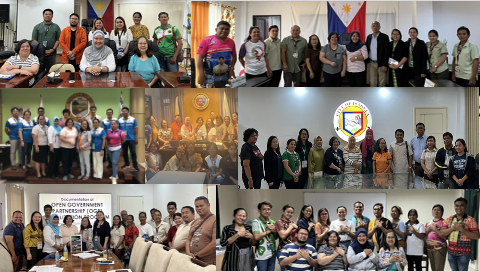
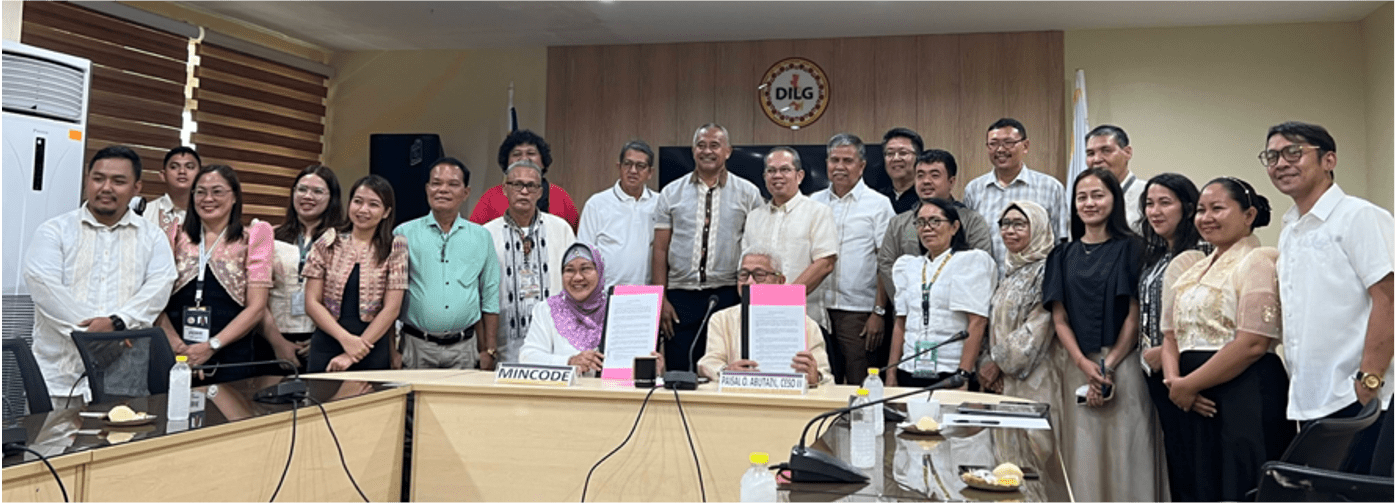
On July 14, 2025, MINCODE entered into a Memorandum of Agreement with the Department of Interior and Local Government (DILG) Regional Office IX. This agreement is for the conduct of Documentation of Open Government Partnership initiatives. These initiatives involve 16 local government units in Region IX (Zamboanga Peninsula).

The Open Government Partnership (OGP) is a global platform for government leaders and civil society advocates. It promotes governance that is transparent, accountable, participatory, and innovative. The Philippines became one of its founding member countries in 2011. Through the issuance of Executive Order No. 31, dated June 20, 2023, the Philippine OGP (PH-OGP) was institutionalized as a multi-stakeholder partnership responsible for overseeing and implementing the country’s commitments to the OGP.

The Philippine Development Plan 2023-2028 provides that the Department of the Interior and Local Government (DILG) will involve more agencies in the national action plan, and mainstream PH-OGP mechanisms at the regional and local levels to ensure sufficient and functional participatory spaces. It also affirms that DILG will continue to implement collaborative practices with civil society organizations (CSOs) in the development, implementation, and monitoring of government programs, and strengthen the capacity of national and local CSOs to engage effectively with government institutions. Accordingly, the DILG-led OGP Localization Program is the institutionalization of fundamental principles of the OGP within the local governance framework. This involves identifying existing local governance processes and structures, and enhancing them through the integration of OGP values – transparency, accountability, citizen participation, and innovation.

Through the OGP Localization Program, the DILG aims to facilitate the documentation of LGU practices aligned with OGP values and principles. To achieve this, the DILG partnered with accredited non-government organizations. In Region IX, the DILG Regional Office IX engaged the services of the Mindanao Coalition of Development NGO Networks (MINCODE) to document OGP practices of LGUs in Zamboanga Peninsula. The Memorandum of Agreement (MOA) was signed between DILG-Region IX and MINCODE on July 14, 2025. A total of sixteen (16) LGUs were selected by DILG-Region IX to participate in the OGP Localization documentation process, based on the Seal of Good Local Governance (SGLG) assessment.

From July 16 to August 15, MINCODE conducted focus group discussions and group interviews in all 16 participating LGUs. The following LGUs participated in this OGP Documentation, namely: Liloy, Gutalac, and Labason in Zamboanga del Norte; Buug, Payao, Mabuhay, Diplahan in Zamboanga Sibugay and Isabela City (Basilan); and Aurora, Bayog, Dumingag, Guipos, Kumalarang, Molave, Tigbao, and Vincenzo A. Sagun in Zamboanga del Sur. A total of 192 government and civil society leaders participated in the OGP documentation process.

Copy of the Full Report is available here.